Join The Passion!

Join The Passion!

M-Station - Perfect Gift for Soccer Players

Showing posts with label games. Show all posts

Tuesday, May 1, 2018

#1 Way To Improve Technique


The #1 ELEMENT your players need to find to guarantee better performance is... SPACE.


 Space. All great players find it, exploit it and benefit from doing so.


 “As an eventual receiver of the ball, you have to look in the open space for a position enabling you to get the football in good conditions. ... It is often a matter of one step more or less.” – Johan Cruyff


We speak of space being time and time being gold. It is that valuable. Gold. And it can be cashed in to accomplish remarkable results on the pitch. A player with space has time and that time affords a more effective technical execution. It may be less than a meter or it may be three. All space that can be exploited to your benefit against an opponent is worth seeking.


It may seem counter intuitive, but if you teach players to play with a deeper understanding of space, they will execute better. The parents on the sidelines and the casual onlooker will think that Johnny or Jane has become so much better technically. Wow, a completed pass. A probing shot. A purposeful dribble.


OK, maybe not the parents who yell “BOOT IT!” but we cannot win over everyone. The most important beneficiary of the productive management of space will be your player. She will dance within that space with confidence. She will find solutions with a fraction more time afforded to her.  Your player will not only appear technically better, but also become technically better as she seeks more technical quivers to add to her arsenal of skills. Demand will drive supply.


Ball control void of spatial awareness is of little service to a true footballer.


The greatest masters of the game were masters of so many components of the game. They could pass,
receive, shoot, dribble, and head the ball. But so many players worldwide can do that. Di Stefano, Pele, Cruyff, and Maradona were artists that delivered a solution when needed most.


“There’s only one moment in which you can arrive in time.  If you’re not there, you’re either too early or too late.”  - Johan Cruyff


In the end we must be honest with our children by explaining that there are no shortcuts to success within or beyond football.  And to refute my entire article here we should not reduce the beautiful game to guarantees and false promises.

But we can suggest that football is a multi-directional game, a choreographed dance in time and space to be enjoyed thoroughly with best friends, caring coaches and loving parents.  And we can go out to train it and to play it as such.


“The ideal space must contain elements of magic, serenity, sorcery, and mystery.” – Luis Barragan


Thursday, June 1, 2017

Change Your Game in Soccer

Your greatest weapon when playing soccer is your mind prior to and during the game.

Your mindset is how you mentally approach and prepare for soccer.

When you have an effective mindset, you have belief that you can win games, or at least compete at a high level even against very good teams.

Negative thoughts will creep in for you, but the goal is to have most of your thoughts enhance confidence and have the ability to refocus when negativity creeps in.

A positive mindset reduces anxiety prior to games, allows you to play freely or intuitively on the pitch and keeps the focus on the task at hand.

A positive mindset not only affects how you approach games, but also how you approach practices and training sessions.

When you have intensity and drive, you train hard and compete in practice rather than merely being physically present in practice.

When you have a strong mindset, you are passionate about competition and enjoy playing your sport, both of which contribute to your success as an athlete.

Is your mindset helpful or hurt your game?

If your mindset is mostly negative, do you think you can do anything about it? Or do you believe "it is what it is?"

The truth is your mindset is a choice. YOU control your mindset.

Your mindset is something you foster by your decision of where to place your focus.

Focus on fear, deficiencies in your game, mistakes, comparisons or the negative criticisms of other, you will grow a negative mindset... and that negative mindset will show in your performance during games.

Focus on your strengths, effort in training, successes and your will to improve your game, and you will cultivate a positive mindset.

A positive mindset will produce positive results in games. Positive results don’t always mean wins; it means playing aggressively, playing to your potential, competing throughout the game, never giving up and making plays.


Change your mindset... change your game!

Tips For Fostering a Positive Competitive Mindset:

"Competitive" means to compete or to make a full-out effort to be successful.

You can improve your mindset by getting into the habit of competing at your peak all the time.  Start competing in practice... push during drills, race to the ball, play aggressively during scrimmages, etc.


As you start winning battles, finishing first during runs, hustling in games, you will notice that your mindset changes... and the results will be positive!


Tuesday, May 9, 2017

Invisible Training

Not all performance improvements are gained in the field


Have you ever stopped to think about when improvement occurs in your training cycle? You may have never thought about this, but you should. Is it right after a hard workout? Is it 12 or 24 hours after a workout?

For most people, the benefits of the work done need time to transpire, and once the body has adapted, you start to see performance improvements.

Some coaches even refer to this recovery period as “invisible training,” less obvious than the actual workout, but vitally important. You may not be doing sets and reps, but when and how you recover determines how much you’ll reap from your “real training” sessions.

Understanding when your improvement happens is crucial if you want to continue to improve your performance because the ability to recover is what changes most as you age. You do not lose the ability to increase strength or power as you age, rather your body slows down its recovery response rate. This cannot be overstated: your ability to recover from training is what changes as you age, not your ability to improve strength or power.

If you don’t adapt your training schedule and intensity to match the biological changes that your body is going through, your training will not continue to produce the effects you seek.


Anyone can train hard, that’s usually not the issue. Instead, it’s whether or not you know when to train hard and when to back off to allow your body to fully recover. If you don’t know when to retreat, you’ll slowly drive yourself into a deeper and deeper hole. This is when sickness and sub-par performances take the place of feeling healthy and seeing improvements on a regular basis. Also known as over-training, this is a lousy place for performance-focused players to reside, and it happens to many Top players who may think that more training is always better.

Though this problem is common, the fix is simple. Shift your mindset. Realize that some benefits are gained not from training harder, but by recovering better. Intensify your recovery period, and you’ll notice more gains. This might seem counter intuitive, but recovering effectively and consistently is a skill you can learn, and you’ll probably have to experiment to find the best methods for your body.
Over the years, some of the athletes I train have found one or two strategies from this list that really help. Individual variation is an important component of applying these strategies. Experiment with these strategies to see whether your performance improves.


Recovery Strategies

Consistent and sufficient sleep. Many people are chronically sleep deprived, and although it can be difficult to get enough sleep, it’s vitally important to your performance not just in the field, but across all aspects of your life.

Proper nutrition. We all seem to be eating on the run these days, but take the time to eat properly and you’ll likely see a performance increase when your body has the appropriate balance of nutrients it needs to perform at the top level.

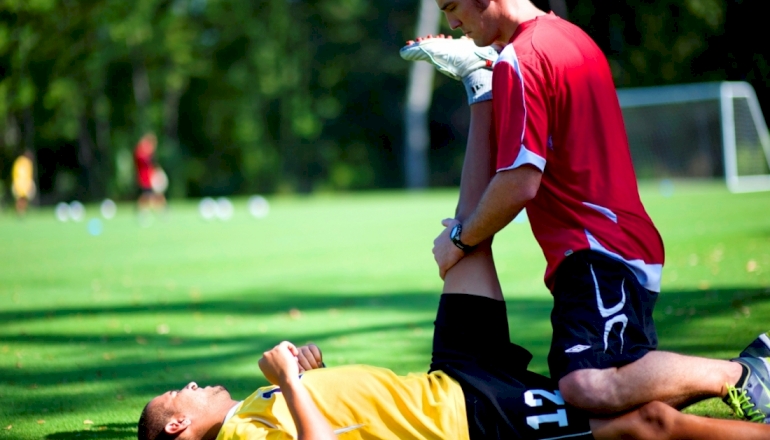
Stretching, foam rolling. All of these activities can help release lactic acid that accumulates in the muscles during a training session. When the body can efficiently flush these toxins out and repair the training-inflicted damage done to the muscles during a workout, you will likely see bigger gains from your work in the field.

Proper warm-up and cool-down procedures. Similar to stretching, warming up and cooling down before and after a tough training session prepares your body appropriately for the work that’s coming and helps the body process the work after it’s been completed.

Icing, cold plunges, and contrast baths. Though chilly, these methods can help reduce inflammation in the body after a workout, which also helps flush out toxins and improves your body’s response to a training session.

Massage and chiropractic adjustments. Keeping everything limber and in alignment can also help your body work smoothly and may enable you to get more out of your training time.


Remember, improvement does not come strictly from actual training sessions. You improve during your recovery, that space in between training sessions when your body does important repair, adaption, and improvement functions.


Thursday, February 16, 2017

Feel Intimidated?!?

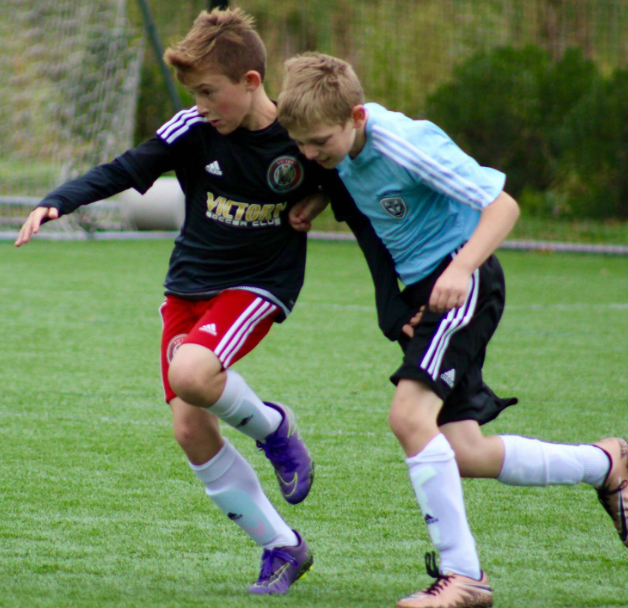
Playing a soccer game against a more physical team can be intimidating for some players.

A team with highly aggressive or bigger players can take the focus off your soccer game if you allow. Soon, you will start to worry about getting fouled, injured or being physically dominated for 90 minutes.

You may even enter the match with a predetermined outcome, "We are going to get crushed because they are bullies on the field."

When you allow the opposing team to steal your focus, you are doomed.

One soccer player I work with would be a shell of himself when playing physical teams.

This player was an undersized but talented finesse player.

During most games, he could weave through traffic, thread the needle on passes and score with regularity.

Unfortunately, when he played against teams with a physical reputation, he would play with trepidation, avoid contact and force passes just to get rid of the ball quickly. He would get so anxious watching his opponents warm-up and fear would course through his veins.

Even though he was skilled enough to outplay these rough opponents, he would freeze during the game and lose his confidence.

He desperately wanted to find a way to overcome this problem so he could play the way he knew he could.

Intimidation can affect even the best teams in the world.

Intimidation has nothing to do with your opponent’s size/strength and everything to do with your mentality. 

Intimidation requires consent, meaning you allow the other team to dictate how you think, feel and play. When your opponents have your focus, the game is practically a foregone conclusion.

Competing against physically aggressive teams requires both physical training and mental toughness.

It's important to prepare for all types of opponents and different types of circumstances so you are confident you can handle whatever situation occurs during a game. 

When playing rough opponents, you may need to alter your game plan but you must stay focused on that game plan and play accordingly.

When the opposing team cannot get in your head, they will start to play recklessly giving you the mental edge.

Tips for Playing Mentally Tough Against Rough Teams

First, know that many physically rough teams are looking to get you frustrated and scared to engage.

Intimidation occurs when you accept that you are intimidated and play scared. 

When you focus on the other team's tactics, remind yourself of your skill set or game plan.

Focus on your speed, agility, quickness, and other talents to counter the opponent.


Dr. Patrick Cohn

Peak Performance Sports, LLC
Mental Training for a Competitive Edge


Thursday, October 27, 2016

How to Mentally Prepare for Games - Alex Morgan Way

Many coaches think their team will perform well if they can get all athletes hyped up before competition.

Thus coaches use pep talks, team cheers, and loud ‘pump up’ music as a means to get athletes psyched up for competition.

Unfortunately, these ‘get psyched’ techniques do not work for every athlete. Every athlete is different when you talk about optimal pregame intensity.
If you have athletes that are more anxious, psych up strategies move these athletes into an over-anxious state.

Anxious athletes may take several minutes to settle into their game, and for some of these athletes, they never seem to come down from that nervous feeling for the duration of the game.
To make matters worse, the more important the game, the more revved up these athletes become, which usually leads to tight play and early mistakes.

As an athlete, you want to be in an optimal zone of intensity prior to competition, that is you need to move into a zone where you are mentally prepared, emotionally ready and properly focused for the start of a game.

If you are more of a nervous or anxious type athlete, you would be better served to learn how to calm down prior to a competition.


US Women’s National Soccer Team forward, Alex Morgan, understands the importance of getting her mind right before the start of a game.

MORGAN: "A lot of people think [soccer] is physically taxing on our bodies, but it's actually just as taxing mentally."

Part of Morgan’s pregame routine is to move into a state of calmness which she credits for her successful level of play in the biggest soccer tournaments, such as the 2012 London Olympics, the 2015 World Cup and the 2016 Rio Olympics.

MORGAN: "I never get too hyped up too early before a game—I feel like that leads to having restless legs and mind. I do a lot of mental visualization and use breathing techniques just to kind of calm myself down before a game."

When your heart is pounding, your thoughts are racing, your focus is pulled into a thousand directions and you become overwhelmed with anxiety, it's impossible to play at your peak.

Therefore, you might benefit from learning how to relax your mind and body prior to competition so you can be mentally ready to perform well when the whistle blows.


Many players use the following techniques to calm themselves down prior to a game:

1. Deep breathing – Taking several deep slow breaths for a period of time will slow down your respiration and heart rate and provide you with a sense of calmness.

2. Imagery – Visualizing yourself in a calm surrounding, like the beach, can be a soothing escape before a game.

3. Listening to music – Slow tempo music will have the effect of slowing down your heart rate and distract your mind from thinking about the game too early before its start.

4. Relaxation or massage – these techniques serve to relax your muscles and body before game time.


Tips for Pregame Calmness:

First, know what works best for you–do you need get pumped up or calm down before competition?
Choose a strategy that works for you. While meditation may benefit some, other athletes may not find that technique too relaxing.

For example, some players I worked with complained that they were too relaxed at the start of the game after doing visualization before the game!

Practice your relaxation technique. You need to become proficient at any technique for it to work in your favor.

Managing your fear is also key to helping your control your emotions before a game.

A relaxed mind and body optimally prepare you to play your best from the very first minute of a game!


Friday, September 18, 2015

ADVICE FOR PLAYERS: HONORING YOUR COMMITMENT

Champions are champions, not because they are necessarily the most physically able or the most physically talented. Champions are champions because they honor their commitment. When they set out to do something they do it, without fail, without trepidation, without question, with certainty. That is why they are champions.

Commitment is imperative to become the very best soccer player you can be. It’s a vital mental quality on and off the pitch. While competing a soccer player needs to commit to their tackles, to their awareness and to their movement. They need to commit to the tactical plan laid out for them and need to commit to supporting their team mates as the game progresses. Away from the pressure of game play, a soccer player must commit to their training.


Commitment – Set Goals

A champion carries certainty into every training session by having a defined set of goals to accomplish. These goals relate to the technical, tactical, mental and physical sides of the game. They are related to weaknesses that a player wants to improve and strengths a player wants to magnify. A champion is committed to improving. Committed to developing their soccer and committed to being a student of their game and the game. They don’t wait around for one of their coaches to set stretch goals. They break their game down into categories and arrive at training with a list of three or four areas that they want to work on. They take ownership. That is the commitment in training they need.

Commitment – Self Talk

A committed soccer player has the inner voice of a champion – “Keep working, keep moving, keep playing, stay focused, on my toes, sharp, sharp, sharp”. They use their self-talk as a motivator, an instructor, an emotional leveller and a focus shifter. They talk to themselves. They don’t listen to themselves. They don’t listen to the voice that says “wait”. Wait isn’t a thought they pay attention to when it comes to the things they have to execute to improve their game. They don’t listen to themselves, they talk to themselves. They talk to “wait”. They talk firmly and loudly.
“There is no wait, there is only do.” With those words they take action. They continue the sets in the gym. They eat like a champion. Sleep like a champion. Trains like a champion. They carries on playing when they’ve made a mistake or goes a goal down. They use their self-talk as an inner compass and an inner driver to keep on going.
“Come on, one more set. Come on, keep focused. Come on, stay strong. Come on, forget that. Come on, focus on your own game. Come on, work harder.”


Commitment – Match Analysis

A champion commits to a post game appraisal no matter the result. If they lost they don’t get too down – they just think about what needs to go better next time. If they won, they don’t get too up – just thinks about what they need to repeat in the next game. They love reflecting with objectivity. To do this, they ask. They take the time to ask others about what they saw – the good and the bad. Asks the coaches and their parents, friends and family. Of course they have a BS filter. They are not going to attend to everything everyone says, but things that make sense to them and things they recognise as perenial weaknesses, they attend to.


Commitment – Always

A lack of commitment can rear its ugly head on a day-to-day basis. It’s that voice inside of you that says “shortcut”. It’s that voice inside of you that says “It doesn’t matter”. But it does matter. In soccer everything matters. From the critical essentials of training and playing to the less than obvious and on so subtle work on your mentality and mindset.
A lack of commitment can come packaged as a feeling as well as a thought. That feeling reverberates around your body causing you to eat badly, shirk the gym, avoid the extras, ignore the analysis. That’s what a lack of commitment does. And it eats away at your ability. It diminishes your potential.

With every hour you lack commitment so your future self looks different. So your future rewards look different. So your future success looks different. So your future joy looks different. So the amount of games you play adds up differently. So your reputation looks different.

Put commitment at the forefront of your game. 1,000 keepie uppies means nothing if you can’t and don’t honor your commitment for every facet of the game. Only then will you really know just how good you can be.


GoalNation’s columnist Dan Abrahams shares his insights and advice for success on the soccer field for players of all ages. A global sport psychologist and author specializing in soccer, Abrahams is based in England and works with professional soccer players in the English Premier League (EPL).


http://6e560yxjhx6wal30vchi1bh2sq.hop.clickbank.net/

Thursday, June 11, 2015

Are your kids mentally tough?

Can they be pushed to achieve great things, or do they need to be coddled? Do they deal well with disappointment and failure, or do they fear it, and thus avoid challenging situations? Do they fear strict, demanding coaches, or do they thrive on them? As parents we know our kids need to be mentally tough if they are going to make it in the real world. Sports is a great way to give them the tools of the trade.

Here are 5 Tips for increasing your kids’ mental toughness.

1. STRUGGLE IS GOOD!

If you want your children to grow up mentally strong, then they need to struggle, they HAVE to struggle! We don’t remember our easy teachers or coaches, we remember our tough ones. Are some of them over the top…of course, and we do not need to accept behavior from adult mentors that berates our children for their ability. When you go to the gym, do you go with friends, or a personal trainer that say “its ok, skip that last set” or do you go with the ones who say “Do it again, do it better, you can do more?” Likely, its the later.
Surround your kids with coaches and teachers that give honest, and sometimes painful feedback, and you will develop mentally tough kids who perform at a high level as well.

2. LET THEM FAIL

There is a myth out there that says if our kids fail, their self esteem and confidence will suffer. This is not true, especially if we help to frame the failure for our kids.

Researchers have shown that if we explain that failure is part of the learning process, and is actually a necessary component of achievement, then their self esteem is not effected. In fact, if the necessity to fail is explained properly, on subsequent tests children often out-perform their peers who are not told that is OK to struggle and come up short. So explain the need to fail, and create an environment where your kids do not fear failure and you will see better performance from your kids in the long run.

3. PRAISE EFFORT

We have talked about this before, but I cannot reiterate enough that praising your child’s ability (you are so smart, you are so artistic, you are such a great player) actually can be damaging to their mindset, and ultimately to their performance. You want a mentally tough kid who performs up to his or her potential? Then praise their effort, highlight the work they are putting into their sport, the extra hours of training, their added effort in training, etc. This is what will help your kids grow tough, confident, and strong. Effort is always the key to ultimate success.

4. STRICT IS A GOOD THING

Being a strict coach, or having strict coaches and teachers for your kids, is actually a good thing. Studies show that not only do children perform better with strict coaches/teachers, but that eventually they realize (sometimes years later) the benefits of having a leader who told them to do it again, do it better, is this your best effort, etc. Is your child doing better in math than in English? Chances are the math teacher is demanding more! Surround your kids with people who demand their best effort all the time. They will grow tougher, and they will appreciate it in the long run.

5. STRESS IS GOOD

Research shows that children who encounter a moderate amount of stress as they grow up actually develop resilience to stressful situations in the future. Since we cannot protect our children from difficult, stressful situations throughout their lives, why not teach them how to deal with them when they are young?  Something as simple as having a difficult teacher or coach will help your kids develop the resilience necessary to live in the real world, and, when difficult situations arise in sports, perform at a high level when others around them crumble!

Good luck instilling some mental toughness in your kids! The process is not always easy, and can even be emotionally painful for you and them, as they struggle in stressful, difficult environments. Just remember that you are building a sturdy foundation for your kids, one to last a lifetime. I am quite certain that a foundation built upon mental strength and fortitude will serve them well!


http://www.victorysoccerclub.com/v-store.html

Thursday, February 26, 2015

What is Commitment in Soccer?


Commitment is a type of motivation. It is the ability to stick with a program, method, or philosophy and apply it daily over a long period EVEN in times of adversity.

How do you stay committed to your practice plan and goals?

The first step to improving commitment is to identify beliefs or distractions that sabotage your motivation. Armed with this information, you are in a position to change your attitude for the better.


Three Ways Soccer Players Sabotage Their Own Commitment:

1. Impatience with improvement: Soccer players often want a quick fix, something that works immediately. If it does not work fast, they are prone to throw it away and not try it again.

2. Fear of trying and not succeeding: Are you afraid of going after your dream and not succeeding? There are no guarantees that if you work harder and put all your energy into getting better your game will improve. But some players can't stomach the fear of not reaching their goals if they give it their all.

3. Over-training Syndrome:
Training too much can also cause you to spin your wheels because you are mentally and physically exhausted. Your body needs rest, your mind needs a break. Yes, it is possible to work too much.

The fist step in making positive changes is to identify self-sabotaging beliefs, rationalizations, generalizations, or behaviors that undermine your motivation to be successful. Then you will be ready to change your behavior to increase commitment.


http://www.victorysoccerclub.com/programsandclasses.html


Wednesday, October 1, 2014

5 Tips to Become a Great Soccer Player

Figuring out the best soccer training method for you can be a great challenge for many young players.  With hundreds of different ideologies and styles around the entire world, knowing what works best for you is never easy.  Each individual player has unique needs that fit to them and them alone.  Learning how your body responds to various training and what really gets your play into top gear can be a very helpful factor in taking your soccer skills to the next level.  But there are some basics that will help all players, regardless of their specific traits.  Here are 5 general tips that will help most soccer players improve their game:


1.  Get in shape – One key element to succeeding in soccer is your physical shape.  Can you keep up with your opponents after an hour of endless sprinting and battling?  Are you strong enough to fend off physical challenges, and is your top-end speed capable of pushing through defenses?  The best players often happen to be the quickest, strongest, and most agile people on the field.  Good training suggestions for this is to go on occasional long runs (of several miles) and also engage in some weightlifting and strengthening through pushups, crunches, and curls.


2.  Get on the ball – Another major factor in determining a player’s talent level is their ball skills.  When you are on the ball you need to be able to control it and maneuver it exactly as you want.  That means taking a good first touch on an incoming pass, dribbling at exactly the right speed and distance so that you can run comfortably with it, and dictating how you wish to disperse the ball through passes and shots.  It’s quite simple really; the more time on the ball you spend the better your ball skills will be.  Go outside with a ball and juggle, dribble, pass, shoot, and do whatever you want with it.  The more touches you accumulate, the better a soccer player you’ll be.


3.  Practice shooting while on the run – One amateur mistake often made is that players train by shooting from set locations with a nice run-up to strike the ball.  Here’s the problem:  that doesn’t recreate a real game situation!  Unless you’re shooting a penalty kick or free kick, you’ll be very unlikely to use those skills.  In a soccer match, most of your shooting opportunities will come while you’re sprinting at top speed, while the goalie is bearing down on you and a defender is pressuring you from behind.  You have just a slight angle to take your shot and your timing must be perfect.  Recreate this experience by practicing shooting on the run so that you are able to take strong shots in games.


4.  Engage in small-sided games – While every player loves a good full-sided scrimmage (and a game as well), those experiences don’t help you improve that much because you spend so little time with the ball or in the middle of the action.  Contrastingly, a small-sided game of 3 vs. 3 will provide you with constant action and touches, forcing you to focus on your play and really get in the match at all times.  Practice makes perfect, and the more time you spend involved in competitive actions on the field, the more your skills will improve.


5.  Learn from your peers – There’s no understating the value of camaraderie between players of a soccer team.  Every person sees the game from a slightly unique perspective and has their own methods of handling pressure, looking for passes, or clearing their heads before taking a vital shot.  As a teammate, you should look to your fellow soccer players for advice and be open to sharing your advice with them as well.  This will help you and the team grow as a whole and collectively understand the sport of soccer. 

With more knowledge comes a stronger mind to help you win in crucial situations.


http://www.victorysoccerclub.com/v-store.html


Monday, September 22, 2014

Building Stamina for Soccer

Soccer is a physically demanding game that requires a great level of physical fitness. Soccer requires you to walk, sprint and jog for a range of distance over a prolonged period of time. A high level of stamina is required to be a successful soccer player. Soccer players must have the ability to dribble, pass or get into open space when their team is in possession. Players must have the ability to quickly recover and track runs when possession is lost and their team is defending.


Build Stamina

Step 1

Perform regular cardiovascular exercise to build stamina for soccer. The Sports Fitness Advisor website cited research performed by Umbro Conditioning in 1997. The research studied professional players and stated over a 90 minute soccer game, the average player spent 40 to 59 minutes jogging or running. Bearing this in mind, it is wise for you to simulate these distances in your stamina training. Youth soccer games run typically for 70 minutes with variations according to age. You should aim for 30 to 50 minutes of cardiovascular exercise to simulate a soccer game. If you find that challenging, you could split into two separate runs. Vary your cardiovascular routine by incorporating cycling or swimming if it becomes repetitive.


Step 2

Include sprinting in your training to build stamina for playing soccer. The research by Umbro Conditioning states that 10 percent to 15 percent of a soccer game is spent sprinting. To build stamina for soccer you must adjust your body to sprinting and recovering quickly to jog or sprint again. The Sports Fitness Advisor website recommends a series of 15 to 20 yards of sprinting with recovery time in between. An example of sprint training would be to perform 10 sets of 20-yard sprints with a 30 second break between. This would build stamina and increase your recovery rate after a sprint.


Step 3

Incorporate circuit training onto your physical fitness training. Circuit training increases stamina and also builds muscle strength with the use of resistance exercises using your own body weight. For the game of soccer, Sports Fitness Advisor recommends stations that require you to exercise for 30 to 60 seconds between rest periods. Exercises included in circuit training can be push-ups, sit-ups and squat jumps.


Step 4

Consume a healthy and balanced diet. Your stamina and physical fitness levels will be directly impacted by the fuel you put into your body. Foods low in fat and high in carbohydrates make up the core of a good diet for a soccer player. A healthy diet will significantly impact your ability to build stamina, and you should avoid soda and sugary snacks. You should also stay fully hydrated at all times with water or sports drink.


Step 5

Conduct a regular stretching and flexibility routine. It is crucial that you stretch thoroughly before and after your training to build stamina. Proper stretching will keep you healthy. Muscle stretches and pulls can result from not stretching properly. An injury will halt your training routine and hinder your ability to build stamina.


Please, share this with your kids...


Wednesday, April 30, 2014

Defensive Midfielder

A defensive midfielder is perhaps one of the most important players in a modern game. He/she can change the tempo of the game.

To be a good defensive midfielder, he/she needs to have many attributes and skills.
First and foremost he/she should always put the team first instead of one self.
He/she should always be ready to provide cover for the back four defenders at all times. Hence he/she should always operate in and around the circle center area. He/she should always be ready to anticipate any attack launched by the opposing players.

The defensive midfielder should always be the first to provide good, clean and hard tackle to the opposing players. By doing so it is hoped that the defensive midfielder can temporary upset the flow of the attack.

The defensive midfielder is also expected to intercept, keep possession and distribute the ball to his fellow teammates.

In order to accomplish all of the above, the defensive midfielder is expected to have a very good stamina. He/she is expected to last the entire duration of 90 minutes plus extra time. Where other players may fail in their fitness endurance, the defensive midfielder is expected to carry the team towards the finished line.

Besides stamina, the defensive midfielder is expected to have strong determination to succeed in his role just like his/her other teammates. He/she should be very determined not to allow opposing players to get past him/her area of control. He/she should be the first to put in a strong and clean tackle on the opposing players. He/she should have the vision to distribute the ball to his/her fellow teammates.

Once the defensive midfielder regains control of the ball from the opposing players, he is expected to pass accurately and effectively to his fellow teammates. He/she should be tactically aware of where his best options to lay a pass to his fellow teammates.

In today’s modern soccer game, the defensive midfielder must be a very intelligent player. He/she must be proactive and must be ready at all times to anticipate his/her opponent moves.

Having a good defensive midfielder is very crucial to a team. It could mean success or failure for the outcome of the game.


Tuesday, April 15, 2014

Train Like a Pro... Goalkeeper.


There are three types of people who work with their hands


People who build and move things using their hands, people who use their hands and minds to create things and people who use their hands, minds, and hearts. These people are called goalkeepers.

They use their hands to control the ball and to communicate, their minds to make challenging decisions, and their hearts to express their passion for the art of goalkeeping!

Goalkeepers are not better than anyone else, but they are very special and unique people.


The goalkeeper is arguably the most important position on the field. A goalkeeper can win a game with one brilliant save or become the villain with a mistimed dive. The nature of the position requires agility, speed, athleticism, confidence, bravery and good communication skills.
Sergio Taborda

For decades, goalkeepers were expected to train alone or were often simply blended into the regular practice sessions with very little attention being provided to the goalkeepers specific needs. Goalkeepers are different from outfield players and must be trained accordingly.

Specialized training is needed for specialized positions. The role of the goalkeeper has changed more than any other position in recent years. With the introduction of the back-pass rule, goalkeepers are required to be as comfortable as outfield players with the ball at their feet. 


Sergio Taborda
Goalkeepers are the last line of defense. They should think like sweeper backs and use the full range of the defensive third of the field. Goalkeepers are the first line of attack. Quality distribution is vital for counter-attacking.

Keepers must possess a wide range of distribution skills in the area of kicking and throwing. Good hands are unusable without quick feet. Footwork is the key to all good shot stopping and catching.


Sergio Taborda
Communication between a goalkeeper and the team is critical for good organization. Whether it be setting up a defensive wall or calling for a high ball, the goalkeeper must be commanding, confident and clear. Bravery is a pre-requisite to play in goal at any level. Unlike outfield players, there are rarely second chances to win the ball in a one v one situation.

Your goalkeepers should be challenged at each practice session. With good planning and organization you can easily implement a specific training regimen. Your goal should be to challenge them to a level of technical excellence.

Sergio Taborda
It is also of paramount importance that you understand how quality technique is developed. "Practice does not make perfect" rather "practice makes permanent." This holds true for both good and bad training. The quantity of practices must never be more important than the quality of practices. Keep your sessions simple, intense and short. To reach a level of technical perfection, the technique must be isolated and performed until it becomes habit.  


Three important components should be applied when training your keepers.
1. Repetition:

Repetition is important in developing the motor memory patterns to enable the goalkeeper to execute each technique automatically, without thinking, so this becomes an ingrained habit. The practices should be designed to ensure that goalkeeper is getting as many touches on the ball as possible.


2. Consistent Quality:

Evelyn Merz
Repetition can be a dangerous thing if the skill is being rehearsed incorrectly. The mechanics involved in each execution of the technique must be accurate and consistent. Aim for an 80% success rate. The coach must be the facilitator in ensuring that poor technique is detected early and precise information is provided to the goalkeeper to correct the problem. The coach must know the mechanical movements involved in each goalkeeping technique to be able to correct those techniques.


3. Explosive Movements:

As soon as possible the goalkeeper must practice the technique at a speed that simulates match play. Slow practices will develop slow goalkeepers and up-tempo practices will develop fast and explosive goalkeepers. Never sacrifice quality for speed when practicing technique.


Monday, April 14, 2014

Overcoming Negative Thoughts And Improving Your Confidence

When athletes call themselves "losers," "chokers," "wimps" or other negative names, it's a bad sign, especially when it comes down to confidence.

Athletes who label themselves with these negative terms hurt their confidence. They've got a little voice in their head that's constantly putting them down. This causes athletes to stay stuck...

Confidence is what you or your athletes need the most to feel successful, improve and have fun.

Too often, however, athletes fall into this trap of labeling- especially if they are given negative labels from teammates, coaches, and even parents, such as "choker."

The real damage is done when athletes adopt these negative labels as the truth- it becomes a self-fulfilling prophecy. The negative labels begin to form an athlete's self-image.

As soon as you or your athletes adopt a label, they are hard to shake and keep confidence suppressed.

If you view yourself as a slow starter, you will be.

If you think you are going to choke, you will.

If you think you're not a top scorer, you won't be.

I think you get the idea...

http://www.victorysoccerclub.com/programsandclasses/summerclinics.html


Overcome Negative Self-Labels

-Step one: Make sure you identify any negative labels you use to describe yourself. They could be "I'm not a pressure player," or "I'm too small," or  "I always strike out."

-Step two: Rid yourself of these negative self-labels. Rationalize with yourself why they are not true. Pretend you are the most positive coach you know. Write them down on a piece of paper, and tear it up.

-Step three: Write down three confidence-boosting labels that describe your positive talents or qualities as an athlete. These could be "I'm a great team player," "I'm one of the best rebounders," or "I'm quick on my feet."

When you enter competition, focus on these positive labels that highlight your strengths and talents.


http://www.victorysoccerclub.com/programsandclasses/summerclinics.html

Wednesday, March 26, 2014

Motor Coordination: The ability to develop into any athlete

Whenever we talk about tactics, training organization and psychology, always looking for new answers to improve the soccer we impose on our athletes in Victory Soccer Club. However, although many coaches have a better sense than I have, many coaches do not even use coordination in training.
 
Our brain works in conjunction with our muscles, functioning as a complete system. This combination, which we call coordination, allows athletes to perform the various technical and tactical actions and the more evolved for motor coordination, athletes can perform various actions with more speed and efficiency. Remember that even we in daily activities, use motor coordination to perform the various tasks.
 
For example, as I write this article, my body is working fine motor skills. I am using small muscle groups such as the hands on the keyboard. Write on computer requires fine motor coordination. On the other hand, walk, jump, run, are actions that require gross motor skills. We need proper coordination for large muscle groups.
 
For soccer players, develop motor skills, is extremely important. In gross motor skills, the player develops his movement speed and direction changes for example, while in fine motor coordination, the player develops a relationship with the ball. Passes for example, or dribbles, requiring the athlete fine coordination.
 
 
http://www.victorysoccerclub.com/
 
 
We must evolve coordination of youth, always
The great athletes began early, some of them train with 4 or 5 years. We must begin to train motor skills from an early age, mainly because your body is developing. If a body is in development, can also more easily develop motor coordination, so that the athlete can move the muscles to take to make movements more accurately.
 
For the player to make a feint, first evaluates the conditions to do it, gathers emotions that helps to make the feint like displaying courage or as an option for the game situation. Then the athlete's brain will send commands to the muscles to perform the feint. Any movement needs the correct interaction between the nervous system and muscles, and when this interaction is more evolved, faster and more accurate movements will be.
 
Motor coordination is present in all
 
Muscles have limits of speed, resistance and strength. This means that we need to extend those limits, training the muscles. But however they are strong and resistant muscles, that is not enough, because to perform movements, we need to work in an organized manner. The brain must learn to work with the various muscles to do certain movement, and this is where motor coordination comes in.
 
In a shot for example, some muscles work more than others, and a pass are no longer exactly the same muscles working or with the same intensity. The brain must learn to distinguish which are the muscles that must work according to the situation, making them work as a whole, accurately. If the brain can not make muscles move in an accurate way, things will not go well for the athletes.
 
 
http://www.victorysoccerclub.com/


Effective coordination equals love of sport in young athletes
 
Kids, as we all know, have that desire to make lots of goals and many feints. But if things do not go well, sooner or later, end up getting tired and not want to play soccer. You need to anchor the taste for soccer early on, so that the player likes to be on the field and really wants to evolve.
 
The role of the coach, especially for younger kids, is to teach them to control the ball, the passing and dribbling, so that when they are 8, 9 or 10 years, are ready to evolve what they have learned. What I mean here is that the manager must develop the ability of the athlete while he is young, so that, after some time, it is capable of doing a little harder and evolve as an athlete.
 
First, we must teach and then evolve. We should, while they are young, evolve their ability, so that when they reach the seniors know how to make various technical and tactical actions, know why they do it and have the will to do. Only this way we can build champions.
 
 
Get a FREE practice session with Victory Soccer Club
 
http://www.victorysoccerclub.com/programsandclasses.html


Tuesday, March 11, 2014

When Should You Shoot in Soccer?

The art of shooting is no easy meal.

While the action seems simple enough (kick ball, score goal, celebrate with teammates), there are a lot of factors that come into play. First off, there is that pesky goalie who is likely to stop any shot that isn’t either spot on are struck with great power.

You must also consider your best options; is there an open teammate, or should you perhaps fake the shot to get into better position? And of course there are a variety of other factors like defenders in your line of fire, the current game situation, your angle to the goal, and the list goes on and on. How does a player know when to shoot the ball?

The magic answer is that shooting the soccer ball totally depends on whether or not you are “feeling it”. When you are feeling it and confident that you will make a strong shot, such a great shot will likely ensue. When you don’t know what else to do and simply heave an effort towards goal, you’ll probably miss. Sometimes goals scored seem to come completely naturally to players. Several well-connected passes leaves the ball rolling to the striker in the penalty box and he or she is able to notch the goal in stride. When things start clicking, everyone is feeling it and a goal is very likely.

http://www.victorysoccerclub.com/programsandclasses.html


But aside from that, there are other things one must consider when shooting, because overly confident players might be “feeling it” every time they touch the ball. Think about what will benefit your team the most. If you have the potential to send in a shot from 25 yards out but see a pass that will set your striker up from far closer, perhaps you should send in that pass.

This can be an especially important principle late in the match if your team is chasing a goal. Hacking away at long distance efforts really isn’t smart unless you are quite sure you can put a decent effort on target (most youth players cannot). Therefore, use caution since you are most likely going to kick the ball out wide for a goal kick and the other team will surely take their sweet time getting the ball back in play. Meanwhile your teammates will all be glaring at you and muttering mean things under their breath!

But when you find the soccer ball at your feet in a good position and get that feeling like you could totally score a goal, blast away! So often in soccer, goals come from a player simply grasping onto an opportunity. When it is done right, it looks so easy! That’s because the player is ready in that moment and simply feels magnetically attracted into kicking the ball on the goal. Such occurrences will happen in a split second and will surprise even yourself in how spot on your shot was! So play soccer smart and always look for that next pass, but when you sense a goal scoring opportunity coming your way, simply go for it!


Join the Passion!

Victory Soccer Club - U.S.A.

FREE PRACTICE SESSION

                                Get a FREE practice session by one of our Pro-Coaches


http://www.victorysoccerclub.com/programsandclasses.html